SMSF Property Valuations

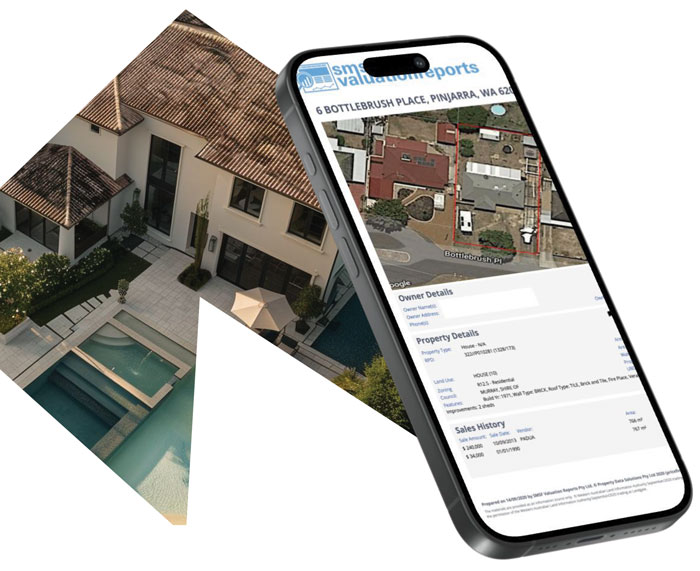
An SMSF property valuation is an independent assessment of a property’s current market value, prepared to meet the Australian Taxation Office’s compliance requirements for Self-Managed Super Funds. We provide certified desktop valuation reports for residential and commercial properties held within SMSFs across Australia. 

Being certified property valuers allows us to meet the ATO’s strict criteria. We can also assist with retrospective and capital gains tax (CGT) valuation reports.

$245
Residential Property Valuations
$550
Commercial Property Valuation & Rental Assessment

Why Your Superfund Property Needs an Independent Valuation

If your Self-Managed Super Fund holds residential or commercial property, you are required to report that property at its market value in the fund’s financial statements at the end of each financial year. This is not optional — it is a legal obligation under the Superannuation Industry (Supervision) Act and the ATO’s guidelines for SMSF trustees.

The ATO expects SMSF property valuations to be based on objective and supportable data. A single piece of evidence, such as a brief letter from a real estate agent stating a value without comparable sales, is no longer sufficient. Trustees need detailed documentation that includes the valuation methodology used, the assumptions underpinning the assessment, supporting market data and comparable sales analysis, and a clear conclusion on market value.

Getting this wrong carries real consequences. In March 2024, the ATO scrutinised over 16,500 SMSFs that had reported property assets at the same value for three or more consecutive years. More than 1,000 SMSF auditors associated with these funds had not lodged any Auditor Contravention Reports. The ATO has since intensified its compliance activity, sending targeted communications to trustees and auditors emphasising the necessity of annual valuations backed by current market data.

Failure to meet valuation requirements can lead to additional tax liabilities, administrative penalties, and increased audit scrutiny. A professional desktop valuation report is the most cost-effective way to protect your fund and satisfy your auditor.

Easy Online Ordering

1. Order Online
Select your property type (residential or commercial), enter the property address, and complete payment. The entire process takes less than 5 minutes. We are also integrated with BGL’s Simple Fund 360 and can provide custom integrations into other platforms.

Fast delivery

2. We Prepare Your Report
Our valuation team conducts a desktop assessment using licensed access to Australia’s leading property data. We analyse recent comparable sales, local market trends, and property-specific factors to determine the current market value using Comparative Market Analysis (CMA) methodology.

ATO Compliant

3. Report Delivered to Your Inbox
Your completed valuation report is emailed to you as a PDF. Reports are typically delivered same day or next business day. Commercial reports with rental assessments may take up to 48 hours.

Our SMSF Valuation Reports

Residential Property Valuation

A comprehensive desktop valuation report for residential property held within your SMSF. The report includes a detailed property description, analysis of recent comparable sales within the local area, CMA methodology statement, market value conclusion as at the specified date, and supporting data that your auditor can rely on to sign off on the fund’s financial statements. Reports are typically 8–10 pages.

  • Covers houses, units, townhouses, and vacant residential land
  • All Australian capital cities and regional areas
  • Delivered same day or next business day


Commercial Property Valuation & Rental Assessment

A detailed desktop valuation and rental assessment for commercial property within your SMSF. This report is essential for commercial properties, particularly where the tenant is a related party to the fund. The report covers market value assessment, rental appraisal at market rates, income analysis, comparable sales and leasing data, and methodology documentation that meets ATO and auditor requirements. Reports are typically 8–12 pages.

SMSF Property Valuations & its Price

What’s Included in Your Valuation Report

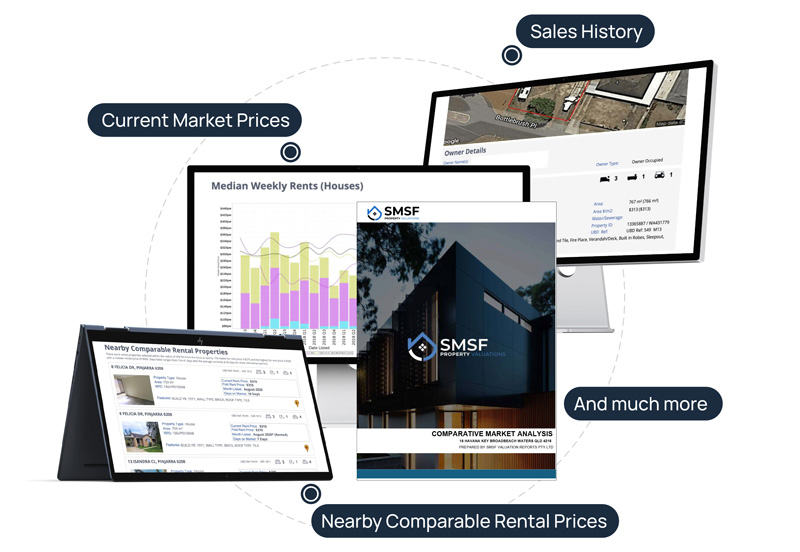
Every report we prepare is designed to provide your SMSF auditor with the objective and supportable evidence they need. Here is what you can expect:

  • A clear description of the property, its location, and features
  • Analysis of at least three recent comparable sales of similar properties
  • Valuation methodology statement (CMA, income capitalisation, or cost approach as appropriate)
  • Market value conclusion as at the specified valuation date
  • Rental assessment, including comparable rental evidence
  • All data sourced from licensed, industry-recognised property databases

Why Accountants and Trustees Choose Us

ATO Compliant: Every report meets the ATO SMSF property valuation guidelines. We work with accountants and auditors across Australia who rely on our reports to complete their annual compliance work.

Fast Turnaround: Most residential reports are completed and delivered same day or next business day. Commercial reports with rental assessments are typically completed within 48 hours.

Australia-Wide Coverage: Our licensed data access covers every state and territory, including metropolitan, regional, and rural areas. No physical inspection is required — our desktop methodology means there is no disruption to tenants.

Competitive Pricing: Residential valuations from $245 and commercial valuations from $550 — significantly less than formal registered valuer reports, while still meeting ATO and auditor requirements.

Easy Online Ordering: Order and pay online in minutes. No phone calls, no paperwork, no waiting for quotes. Accounting firms and auditors can arrange account-based billing for bulk orders.

Independent & Certified: We are an independent valuation firm with no conflicts of interest. Our assessments are objective, evidence-based, and free from outside influence.

Frequently Asked Questions

An SMSF property valuation is an independent assessment of the current market value of a property held within a Self-Managed Super Fund. The valuation is required to meet the Australian Taxation Office's reporting requirements, which mandate that all SMSF assets be reported at market value in the fund's annual financial statements. The valuation must be based on objective and supportable data, such as recent comparable sales and current market analysis, and should be documented in a way that can be provided to the fund's SMSF auditor for verification.

The ATO requires that SMSF trustees value all fund assets at market value when preparing the fund's financial accounts and statements each financial year. For property specifically, the ATO expects valuations to be based on objective and supportable data. This means the valuation must include a clear methodology, supporting market evidence such as comparable sales, and a documented conclusion. A single unsupported opinion, such as a brief agent letter without comparable data, is no longer considered sufficient. Trustees must keep records that explain how they determined property values, as these documents serve as the primary evidence during audits.

The ATO requires all SMSF assets, including property, to be reported at market value at the end of each financial year (30 June). While a formal independent valuation report does not need to be obtained every single year, annual valuations are becoming the standard expectation. A new professional valuation should be obtained at least every three years, with supporting evidence used for the intervening years. However, more frequent valuations are required when commencing a pension (within 12 months prior), when acquiring or disposing of property, when a significant event occurs (such as major renovations or substantial market shifts), or when the property is leased to a related party. Read our SMSF valuation frequency guide for more detail.

We primarily use the Comparative Market Analysis (CMA) approach, which is the most widely accepted method for SMSF property valuations. CMA analyses recent sales of similar properties in the same area, taking into account property size and features, location characteristics, recent market trends, structural condition, and improvements. For commercial properties, we also apply the income capitalisation approach where appropriate, which determines value based on the property's ability to generate rental income. The cost approach may be used for unique properties with limited comparable sales data. All methodologies comply with ATO requirements for objective and supportable valuations.

Yes. The ATO has been actively investigating SMSF valuation compliance. In March 2024, the ATO scrutinised over 16,500 SMSFs that had reported certain asset classes at the same value for three or more consecutive income years. The ATO also identified more than 1,000 SMSF auditors who had not lodged any Auditor Contravention Reports regarding potential breaches of market valuation rules. In response, the ATO initiated targeted communications to trustees and auditors, emphasising the necessity of annual valuations based on current market data. Trustees who fail to meet valuation requirements can face additional tax liabilities and administrative penalties.

Failing to properly value SMSF property can have serious consequences. Your SMSF auditor is required to verify that all assets are reported at market value. If they cannot verify this, they must modify their audit report and may be required to lodge an Auditor Contravention Report (ACR) with the ATO. This can trigger additional ATO scrutiny, potential administrative penalties, and additional tax liabilities for the fund. In severe cases, the ATO may issue a direction to rectify the contravention or impose penalties on the trustees personally. Regular, properly documented valuations are your best protection against these risks.

Technically, a trustee can provide their own valuation, but only if it is based on objective and supportable data. In practice, this is very difficult for property assets because trustees rarely have access to the comprehensive market data and comparable sales information needed to produce a valuation that will satisfy their auditor and the ATO. The ATO recommends using a qualified independent valuer if the property represents a significant proportion of the fund's value or if the valuation is likely to be complex. Using an independent desktop valuation service like ours removes this risk and provides your auditor with reliable, documented evidence at a fraction of the cost of a formal registered valuer's report.

A desktop valuation is a professional assessment conducted remotely using licensed property data, recent comparable sales, and market analysis. It does not require a physical inspection of the property. A full (or formal) valuation involves a registered valuer physically inspecting the property and preparing a detailed report, often 20 or more pages long, using multiple valuation methodologies. Desktop valuations are significantly more affordable (our reports start at $245 compared to $2,000–$5,000+ for formal valuations) and are accepted by the ATO and most SMSF auditors for annual compliance reporting. A formal valuation may be recommended for complex or high-value properties, or when property is being transacted between related parties.

Most residential valuation reports are completed and delivered same day or next business day. Commercial valuation reports, which include a rental assessment, are typically delivered within 48 hours. All reports are emailed to you as a PDF document. If you have an urgent deadline, please contact us and we can discuss priority delivery.

Yes. We work with accounting firms and SMSF auditors across Australia. If you are ordering multiple valuations for your clients, we can arrange account-based billing so you do not need to pay by credit card for each individual order. Please contact us to set up a firm account. See our accountants and advisers page for more information.

To order a valuation report, you need to provide the property address, the type of property (residential or commercial), the valuation date (usually 30 June of the relevant financial year), and your contact email for delivery. For commercial properties, we may ask for additional information such as current lease details and rental income if available. The more information you provide, the more comprehensive your report will be.

Our reports are designed to meet the ATO's requirements for SMSF property valuations and are accepted by SMSF auditors across Australia. Our reports include the detailed comparable sales data, methodology documentation, and market value conclusion that auditors require to verify the fund's property values. We work with accounting firms and audit practices of all sizes, from sole practitioners to mid-tier firms.

We accept PayPal, Visa, Mastercard, and American Express. Both credit and debit cards are accepted. Accounting firms and auditors can arrange to pay on account for bulk orders. All prices are displayed inclusive of GST where applicable.

Division 296 is now law. The Treasury Laws Amendment (Better Targeted Superannuation Concessions) Bill 2025 passed both houses of Parliament and introduces an additional 15% tax on superannuation earnings for individuals with a total superannuation balance exceeding $3 million, effective from 1 July 2026. Because this tax is calculated based on the change in member balances from year to year, accurate annual property valuations become critical. An understated valuation in one year followed by a correction creates an artificial spike in earnings that could trigger additional tax. Read our Division 296 guide for SMSF property owners.

Get in touch

Feel Free to contact us if you have any specific questions and complex valuations prior to submission.

Recent Blog Posts
ATO Superfund Property Valuation Guidelines

ATO SMSF Property Valuation Guidelines: What the ATO Actually Requires By Mike Wilczynski, Certified Property Valuer and Chartered Accountant  |  Updated August 2026 The ATO’s SMSF valuation guidelines require every fund asset, including property, to be reported at market value as at 30 June each year, supported by objective and supportable evidence. No rule says a valuer must inspect the property annually. But the evidence behind the number has to stand up to an auditor, and since 2024 the ATO has been checking that it does. Most articles on this

Read More »
HOW MUCH DOES A PROPERTY VALUATION COST

How Much Does a Property Valuation Cost in Australia?

By Mike Wilczynski, Certified Property Valuer and Chartered Accountant  |  Last updated July 2026 Straight answer: our fixed fees are $245 incl. GST for a residential property valuation and $550 incl. GST for a commercial property valuation including a market rental assessment. Every report is prepared by a Certified Property Valuer, delivered Australia-wide, and written to the standard the ATO and SMSF auditors require. Most valuation firms make you request a quote before they will tell you a number. We publish ours, because the price of a compliance valuation should

Read More »
How to Buy Commercial Property in Australia

Free Commercial Property Valuation Calculator

By Mike Wilczynski, Certified Property Valuer | Chartered Accountant · Published: January 2024 · Updated: March 2026 · Cap rates reviewed quarterly Use our free commercial property valuation calculator to estimate the market value of your office, retail, industrial, or rural property using three industry-recognised methods. Whether you hold commercial property in a Self-Managed Super Fund or are evaluating an investment, this tool gives you a quick estimate based on real valuation methodologies used by professional valuers across Australia. Select a method below, income capitalisation (the most common approach for

Read More »